Hacking Chinese Medicine

By Janice Walton-Hadlock

Total CPDs: 9
Total CPDs: 9
IVAS (10), Standard Certificate (10), NCCAOM (10)
Access Period: Lifetime
Series Length: 10hrs

Series Overview

Both you and your patients will benefit from the insights and clarifications in this lecture series.

Hacking Chinese Medicine, a book that demystifies and renders logical the confusion and conflicts currently inherent in the study of Chinese medicine, is one of Janice Walton-Hadlock’s most popular books.

You will be transported around the world, to Vietnam, Singapore, and India, and of course, China, as she shares cozy insights from doctors around the world. You will be introduced to a much more logical and gratifying understanding of Chinese medicine than you probably received in your English language courses. You will hear about her own clinical mistakes and experiences and even her discoveries from relentless digging into the Nei Jing.

You can understand what it is you are actually doing when you diagnose and treat using Chinese medicine. You can learn what the code words of Chinese diagnostics actually mean – and it’s usually not what you think. You will learn why some of your treatments work, and why so many of them do not.

As one lecture attendee exclaimed, “Thank you! I always knew there had to be a logic, a science, to this medicine!

Code. Not Language.

Janice Walton-Hadlock uncovers the secret codes of Chinese medicine.
Total CPDs: 1
IVAS (1), Standard Certificate (1), NCCAOM (1)
Access Period: Lifetime
Course Length: 1hrs
Course Notes: There are no notes provided with this course.

Course Overview

Your key to unlocking the secret codes of Chinese medicine. A very literate Chinese speaker has no more idea what is meant by “Lung Phlegm in the Liver” than does the average English speaker. For that matter, the word “wiry” and the concept of “Spleen pulse” don’t mean anything to the average Chinese speaker. The words we use in Chinese medicine are not words, per se. They are code. “Liver,” as you well know, does not mean liver. For that matter, “Yin,” in the context of medicine, does not mean Yin. Damp certainly does not mean Damp. And Spleen Yang is present in the smallest, single-celled organism – an organism that does not have a spleen. Your patient might tell to you, “I know all about Yin and Yang. The moon is Yin, males are Yang…” But these Taoist meanings have almost nothing to do with the way these words are used in the Chinese medicine code. What does Yin and Yang mean to a Korean musician? To a traditional Taoist? To a Feng Shui practitioner? And all these different meanings are different still from what Yin and Yang mean to a TCM practitioner! If you understand the way these code words work in TCM, and what they actually mean in plain English – which is not what you think – the whole world of Chinese diagnostics will suddenly make a whole lot of sense. It will even become something you can explain to your patient, using simple, obvious English. Just knowing how the vocabulary actually works, something I never learned in my years of school, has made all the difference in my practice. I understand what I am doing. I am no longer just blindly following the dots. This first class covers material in the first three chapters of Hacking Chinese medicine, and will introduce you to some of the more common usages of the “secret codes of Chinese medicine."

Course Objectives

  • Adding depth to an English-speaking practitioner’s understanding of the vocabulary and phraseology of Chinese medicine.
  • Explaining cryptic aphorisms, mistranslations, and the error accumulations of centuries.
  • Introducing the implications of channel theory from an electromagnetic, 21st century perspective.

Course Outline

0 hrs - 15 min
Word-based communications between doctors versus talking with non-doctors and patients (translator confusion). Differences between historical use of code words and medical use of code words.
15 min - 30 min
Various meanings of Yin and Yang in different contexts.
30 min - 45 min
Discussion on how scholarly writing can be cryptic. Infinite possibilities: The example of Lung-Phlegm in Liver.
45 min - 1 hrs
Overview of highly specific translations and meanings.

Qi: The Most Important Code Word in Chinese Medicine

Janice Walton-Hadlock reviews the historical origins of Qi.
Total CPDs: 1
Standard Certificate (1), IVAS (1), NCCAOM (1)
Access Period: Lifetime
Course Length: 1hrs
Course Notes: There are no notes provided with this course.

Course Overview

Qi is a code word. It can take years for a student of Chinese medicine to begin to understand all the variations and permutations implied by the word “Qi”. Even so, many practitioners of Chinese medicine fling this word at their patients. The imprecise and even incorrect use of the word “Qi” can lead to grave concerns on the part of patients who go home frightened by their “Qi deficiency” or puzzled about their “Stagnant Qi.” By learning the ancient roots of this word, by reviewing the derivative forms of this word (Gu Qi, Zhong Qi, and so on), a practitioner can be reminded of ways to communicate with his patient in a manner that isn’t mystical or alarming. By putting key Chinese medical words into English – and by knowing the historical origins of these words and understanding what they actually meant historically as well as in light of western understanding of physics – a practitioner can come up with far more helpful treatment plans, and also empower his patient.

Course Objectives

  • Learn the ancient roots of the word Qi, and some of the ancient philosophy behind it.
  • Learn how to translate the various type of medical Qi into simple English that a patient or western MD can easily relate to.
  • Receive examples of how using the Chinese medical terms with patients can lead to confusion and even fear on the part of the patient.
  • Consider the patient empowerment that comes with actually understanding with the acupuncturist is saying.

Course Outline

0 hrs - 15 min
What does the word Qi mean? Here we cover two broad ways we can speak about Qi. Introduction to the etymology of the word Qi from Sanskrit. Outlining the two divine aspects of Qi.
15 min - 30 min
Further depth on the etymology of Qi. Historical and cultural implications of Qi in modern China.
30 min - 45 min
Qi and consciousness. Talking about Qi with patients.
45 min - 1 hrs
Outline of all the various types of Qi. Why do we learn about so many different types of Qi? What benefit does it provide to us? Is there such a thing as good or bad Qi?

A New Look at the Axioms of Chinese Medicine

Janice Walton-Hadlock gives an overview about axioms and variations in flow of Channel Qi.
Total CPDs: 1
IVAS (1), NCCAOM (1), Standard Certificate (1)
Access Period: Lifetime
Course Length: 1hrs
Course Notes: There are no notes provided with this course.

Course Overview

When’s the last time you were helped by the carefully memorized statement: “The Lungs go up and out?” This class explains how, in our modern times, the words “Channel Qi” have been intentionally omitted, rendering many of our lessons senseless. For example, most of the aphorisms and axioms that we learn in school refer vaguely to “Qi” or specific organs. These axioms are so vague as to be meaningless in many cases. By re-inserting the words “Channel Qi” into these “rules” of TCM, we can see how these axioms are helpful and provide constant reminders that we are supposed to be aware of the flow patterns of our patients’ channel Qi, using that information diagnostically and in guiding our treatment choices.

Course Objectives

  • Depth will be added to an English-speaking practitioner's understanding of the vocabulary and phraseology of Chinese Medicine.
  • The student will learn about cryptic aphorisms, mistranslations, and various error accumulations that have spanned over centuries.
  • The student will have a better understanding of the implications of Channel Theory from an electromagnetic, 21st century perspective.

Course Outline

0 hrs - 15 min
The importance of feeling where the Channel Qi is flowing is explored. Current understanding of the phrase "De Qi," based on scholarly analysis.
15 min - 30 min
Overview on Axioms.
30 min - 45 min
Discussion on channels as learned in school.
45 min - 1 hrs
Overview on variations in flow of Channel Qi. The idea of 'go through, no pain; No go through, pain.'

Causation & Indications: Poor Syntax

Janice Walton-Hadlock discusses the various use of Chinese medical terms for translating symptoms.
Total CPDs: 1
IVAS (1), NCCAOM (1), Standard Certificate (1)
Access Period: Lifetime
Course Length: 1hrs
Course Notes: There are no notes provided with this course.

Course Overview

We are often taught that a symptom is “caused by” some Chinese medical term. Very often, the medical term is simply a translation of the symptom onto Chinese medical code. Knowing this can help both doctor and patient and prevent much confusion. Likewise, books that say “This acupoint ‘treats’ a given problem” or is “indicated” for a given problem, as if all symptoms have the same origin, completely miss the point of how acupuncture works and why each person’s symptoms might have a somewhat different origin, requiring individual-specific treatment. When you get past this sort of point prescription magical thinking and understand what the point indications really mean, you’ll be ready to learn how to choose acupoints that will give brilliant results.

Course Objectives

  • Depth will be added to an English-speaking practitioner's understanding of the vocabulary and phraseology of Chinese Medicine.
  • The student will learn about cryptic aphorisms, mistranslations, and various error accumulations that have spanned over centuries.
  • The student will have a better understanding of the implications of Channel Theory from an electromagnetic, 21st century perspective.

Course Outline

0 hrs - 15 min
Discussion on the use of Chinese medical terms for translating symptoms. Examination of the terms 'treats' and 'indications.'
15 min - 30 min
Overview of terminology surrounding Channel Qi example.
30 min - 45 min
Further discussion on Channel Qi.
45 min - 1 hrs
Case study examples.

Changing Times, Changing Vocabulary

Janice Walton-Hadlock lectures on mistranslation, Jing Xu diagnosis, and polycystic ovarian syndrome.
Total CPDs: 1
NCCAOM (1), IVAS (1), Standard Certificate (1)
Access Period: Lifetime
Course Length: 1hrs
Course Notes: There are no notes provided with this course.

Course Overview

In ancient times, Chinese medical terms were often words about the weather. They were used literally and metaphorically. Words like Damp, Wind, Heat, Cold, Sun, were often used to explain how someone’s illness came about through over­exposure to some climatic situation. If a problem was not, in fact, due to the weather, the climate words were used anyway. In these cases, the words were metaphors and euphemisms. In these cases, they don’t actually help with our understanding of what’s going on. These words are great for putting together a pattern diagnosis and choosing a treatment out of the pattern-code box, but they often do not help us understand what’s really going wrong, they don’t help us know what’s happening with the channel Qi, and they very, very often do NOT lead us to effective treatment. Today, very few of our patients are suffering from health problems associated with climatic excess. However, we still use the same old weather based words to codify the treatment patterns. Very often, this makes our diagnoses and treatment names misleading, not useful, or even stupid and ludicrous. This talk will explain how to work around the limitations and misunderstandings that come about through using these old terms, and suggesting some better ways to communicate with patients about the underlying causes of their problems.

Course Objectives

  • Depth will be added to an English-speaking practitioner's understanding of the vocabulary and phraseology of Chinese Medicine.
  • The student will learn about cryptic aphorisms, mistranslations, and various error accumulations that have spanned over centuries.
  • The student will have a better understanding of the implications of Channel Theory from an electromagnetic, 21st century perspective.

Course Outline

0 hrs - 15 min
Commentary on mistranslations and a changing world.
15 min - 30 min
Discussion on the term damp and other examples of modern causes for old patterns.
30 min - 45 min
Lecture on Jing Xu diagnosis.
45 min - 1 hrs
Disussion on poly-cystic ovarium syndrome. Case examples.

Mistranslations of the Chinese Code Words

Janice Walton-Hadlock covers correct translation for some of the most common Chinese medical terminology used.
Total CPDs: 1
Standard Certificate (1), NCCAOM (1), IVAS (1)
Access Period: Lifetime
Course Length: 1hrs
Course Notes: There are no notes provided with this course.

Course Overview

This class covers some code words that have been mistranslated into English. Our use of these words makes this medicine even more cryptic than it needs to be. Also, by using mistranslated words, we inhibit our ability to really understand what we are talking about when we use these words as if they made sense. Even worse, if we use these words with our patients, they are left with very wrong ideas about what is going on inside their bodies. If you use the correctly translated terms, not only is this medicine easy to explain, but your patients can be empowered by knowing what is going on in their own bodies. Oppositely, using mistranslated words makes our diagnoses and treatment names misleading, not useful, or even stupid and ludicrous. Also, most of the encoded Pattern names have left out the term “Channel Qi", which was always understood to be the underpinnings of this type of medicine. This talk will give the correct translation for some of the most common terms, offering a better way to communicate with patients about the underlying causes of their problems.

Course Objectives

  • Depth will be added to an English-speaking practitioner's understanding of the vocabulary and phraseology of Chinese Medicine.
  • The student will learn about cryptic aphorisms, mistranslations, and various error accumulations that have spanned over centuries.
  • The student will have a better understanding of the implications of Channel Theory from an electromagnetic, 21st century perspective.

Course Outline

0 hrs - 15 min
Overview of concept of mistranslated words.
15 min - 30 min
Discussion on Tremor is not wind.
30 min - 45 min
Discussion on Evil Wind, Hot, or Cold and unstable or unexpected Channel Qi behavior.
45 min - 1 hrs
Pattern name errors examples. Review of main concepts. Common questions.

Balancing Yin and Yang - And an Introduction to Channel Theory

Janice Walton-Hadlock discusses about "Balancing Yin and Yang", channel theory, and it's applications.
Total CPDs: 1
IVAS (1), Standard Certificate (1), NCCAOM (1)
Access Period: Lifetime
Course Length: 1hrs
Course Notes: There are no notes provided with this course.

Course Overview

If you are an English speaker, you may have a very incorrect idea of what is meant by the Chinese colloquial phrase “Balancing Yin and Yang.” Loosely translated, this phrase means anything from “let’s mix things up” to “let’s make things better.” Then again, the phrase means something very different in classical Taoist Chinese, where it means the same as the ancient Greek idea of the same era: “balancing body and mind.” Which refers to lifestyle choices, and isn’t something that we can treat using medicine. Learn more about this history of this concept and what it means for us in the field of Chinese medicine. This lecture is the last of three that address common mistranslations from the Chinese into English. After a discussion of Balancing Yin and Yang, the lecture makes a foray into a new field altogether: channel theory and it’s applications, starting with an example of treating asthma.

Course Objectives

  • Depth will be added to an English-speaking practitioner's understanding of the vocabulary and phraseology of Chinese Medicine.
  • The student will learn about cryptic aphorisms, mistranslations, and various error accumulations that have spanned over centuries.
  • The student will have a better understanding of the implications of Channel Theory from an electromagnetic, 21st century perspective.

Course Outline

0 hrs - 15 min
Overview of Yin and Yang and its etymology.
15 min - 30 min
The ancient meaning of Yin and Yang.
30 min - 45 min
The idea of the acupuncturist modeling balance for the patient.
45 min - 1 hrs
How to use Channel Theory.

Channel Theory Basics and a Case Study

Janice Walton-Hadlock discusses electromagnetic properties of fascia and a case study using Channel Theory.
Total CPDs: 1
IVAS (1), Standard Certificate (1), NCCAOM (1)
Access Period: Lifetime
Course Length: 1hrs
Course Notes: There are no notes provided with this course.

Course Overview

The course provides an introduction to some of the electromagnetic properties of fascia, and why western researchers are now suspecting that electrical flow in fascia corresponds with the “mysterious meridians of Chinese medicine.” This course covers: Conversion from one type of channel Qi to another, and the locations of these conversions; how channel Qi creates organs, and not the other way around; how we can learn to feel the differences between one channel and another; how different types of channel Qi might be responsible for the development of the various sensory brain cells; The importance of always bearing in mind the sequence of the channel Qi flow when diagnosing a health problem. The case study demonstrates using channel theory to track down the very unexpected, multiple, channel blockages causing the patient to have thirty years of chronic migraines, weakness on one side of her body, and why her knee, ankle, neck, and 6th rib on her right side were always “popping out of place.” None of the traditional Pattern diagnoses helped her condition - tongue and pulse showed weakness, but didn’t help show what the problem actually was; this course will illuminate the processes used to solve the issue.

Course Objectives

  • Depth will be added to an English-speaking practitioner's understanding of the vocabulary and phraseology of Chinese Medicine.
  • The student will learn about cryptic aphorisms, mistranslations, and various error accumulations that have spanned over centuries.
  • The student will have a better understanding of the implications of Channel Theory from an electromagnetic, 21st-century perspective.

Course Outline

0 hrs - 30 min
Discussion on how each of the channels 'feel' different.
30 min - 45 min
Commentary on how electrical currents and Channel Qi drive functions that are normally attributed to Organs in single-cell organisms that don't have organs.
45 min - 1 hrs
Discussion on how the Channel Qi is always flowing in one continuous cycle.

Classic Theory: When It Doesn't Work

Janice Walton-Hadlock discusses classic theory and why some of it doesn't work.
Total CPDs: 1
IVAS (1), Standard Certificate (1), NCCAOM (1)
Access Period: Lifetime
Course Length: 1hrs
Course Notes: There are no notes provided with this course.

Course Overview

Some classic theory doesn't actually work. In school, we are taught this theory as if it works, but it never has and never will; an example of this is, 'Ear ringing is Kidney Yin Deficiency.' Treatments that Tonify Kidney Yin do not get rid of ear ringing. This course discusses why false theory is kept in the canon (hint: tradition) and also how to successfully treat some of the problems for which we've learned false theory. The opposite law is also true. We learn in school that certain health problems are incurable. Usually, this is because western medicine has deemed them incurable or because the false theory never works. In the presentation, examples are shared of 'incurable' problems that are actually quite easy to treat.

Course Objectives

  • Depth will be added to an English-speaking practitioner's understanding of the vocabulary and phraseology of Chinese Medicine.
  • The student will learn about cryptic aphorisms, mistranslations, and various error accumulations that have spanned over centuries.
  • The student will have a better understanding of the implications of Channel Theory from an electromagnetic, 21st-century perspective.

Course Outline

0 hrs - 15 min
In this class, classic Chinese medical theory that everyone knows but doesn't actually work will be covered, and examples will be explored. Practical methods for a very common condition that often accompanies tinnitus will be examined as well.
15 min - 30 min
Also discussed is why structural problems don’t respond nearly as well to acupuncture, herbs, moxa, or cupping, as they do to Yin Tui Na. An introduction to Yin Tui Na theory is provided, as well as some examples.
30 min - 45 min
In addition, health problems that are considered “incurable” in Chinese medicine such as bipolar syndrome, Parkinson's, etc., will be discussed. These notions will be examined in-depth, and how treatment using Channel Qi methods can alleviate and treat these conditions.
45 min - 1 hrs
Finally, the class considers an overview as to what does and what does not respond quickly to Chinese medicine, which includes an overview on pathogens, injuries, and other scenarios.

Channel Qi Basics

Janice Walton-Hadlock covers basic concepts about Channel Qi.
Total CPDs: 1
NCCAOM (1), Standard Certificate (1), IVAS (1)
Access Period: Lifetime
Course Length: 1hrs
Course Notes: There are no notes provided with this course.

Course Overview

This course will cover concepts about Channel Qi and outline the importance of Qi direction in making an accurate diagnosis. Feeling Channel Qi is easy. Although many practitioners feel it is difficult, the instructor will review how it can be acquired in practice. In detail, the theory of how to use and diagnose Channel Qi including the proper use of hands will be shared. Different concepts involving currents and the sensations given off by the Channel Qi will also be outlined. The words that students have used to describe the sensations given off by the Channel Qi will be included.

Course Objectives

  • Depth will be added to an English-speaking practitioner's understanding of the vocabulary and phraseology of Chinese Medicine.
  • The student will learn about cryptic aphorisms, mistranslations, and various error accumulations that have spanned over centuries.
  • The student will have a better understanding of the implications of Channel Theory from an electromagnetic, 21st-century perspective.

Course Outline

0 hrs - 15 min
Why bother learning about Channel Qi? The instructor goes into detail about why the concepts are beneficial to practice.
15 min - 30 min
Understanding Channel Qi currents
30 min - 45 min
The theory of how to use and diagnose Channel Qi, and information on the importance of hands.
45 min - 1 hrs
Observe a demonstration to illustrate concepts from instructor.
I found it informative, enjoyable, and readily applicable to my work life.
Sarah S. - United States
Great speaker! I love her enthusiasm and excellent knowledge and ability to explain the subject.
Rita W. - Canada
I so enjoy Ms Hadlock's method of teaching through lots of stories and examples.
Janet S. - United States
Dr. Janice Walton-Hadlock is a passionate teacher and a pleasure to learn from. Her teaching opens us to another level of knowledge in oriental medicine that brings a new potential to one's practice.
Christine O. - Canada
Excellent course and book. I love Dr. Janice's writing style, as if she were explaining these concepts in person in simple language.
Sandy A. - Canada
Janice is an amazingly engaging entertaining presenter. She makes it easy to follow along with her and start think outside of the box of standard TCM teachings. I'm looking forward to watching more lectures in this series and to reading her books.
Andreas L. - Australia

Disclaimers:

Accessing Your Series
After checking out, your email address will be sent to Net of Knowledge securely and you will gain instant access to your series. If you do not have a Net of Knowledge account yet, one will be created for you automatically and you will receive an email with a link to set up your password. Log in to your account at netofknowledge.com and start learning!
Unlimited Access and CEUs
You will have unlimited access to this series for as long as it is on Net of Knowledge, so that you can keep reviewing and learning from it over the years. CEU requirements must be completed within 1 year from the purchase. During this time, you must view the training and complete any required documents to get your certificate. You must also print and save your certificate for your own records. Each individual course has a separate certificate of completion. There is no certificate for the entire series.
Cancellation Policy
Please note we do not offer refunds for our recorded online courses/webinars.
Note
These recordings are available in an online format only; you will not receive a DVD or physical copy of the recording – they are only available to watch on the internet through your online account.
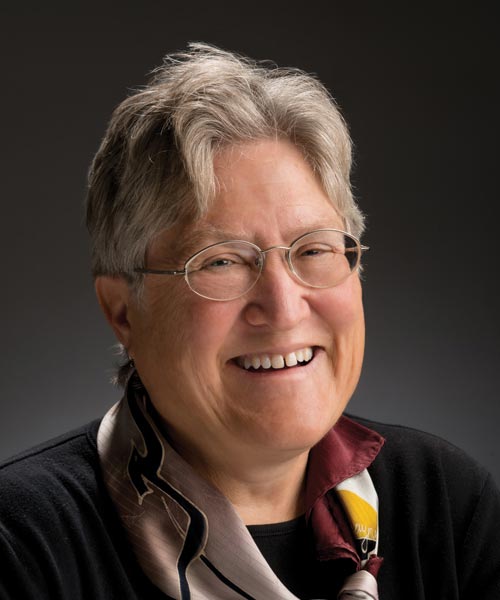
Taught by Janice Walton-Hadlock

Janice Walton-Hadlock, DAOM, L.Ac., is a professor at Five Branches University, and specializes in Channel Theory, Yin Tui Na, Psychology and Counseling; she is the founder of the Parkinson's Recovery Project, and is an author on topics relating to Channel Theory and Parkinson's.
View full bio